Establishing consistent opening rituals could prove to be beneficial, especially in group practice. Spending one minute or more with anything that feels familiar at the start of any session could feel comforting when an old client quickly reconnects with familiar touch. Many clients could instantly relax when they recognize what they are feeling and receiving.
In this article, we focused mostly on opening rituals, and added in a few common closing rituals as well. We provided sample and common rituals for the following massage therapy and soft tissue bodywork applications:
Abhyanga & Ayurvedic Massage
Aromatherapy Massage
Craniosacral Therapy
Chair Massage
Cupping Massage
Deep Tissue Massage
Geriatric Massage
Hot Stone Massage
Ice Massage
Lomi Lomi Massage
Manual Lymphatic Drainage
Myofascial Release
Neuromuscular Therapy
Oncology Massage
Post-Surgical Bodywork
Prenatal Massage
Reflexology
Reiki
Sports Event Massage
Swedish Massage
Thai Massage
Trigger Point Therapy
Here is a list of common closing rituals that can be commonly practiced amongst all modalities:
Thank the client for their time.
Express wishful thoughts silently or aloud for the client.
Apply a hold with static placement of their hands on the client’s body.
Ask the client to take some deep breaths.
Perform body brushing techniques.
Use a towel to remove massage medium from the client’s skin.
Assist a client off the treatment table with select services or customers.
Turn up any dim lighting so the client has greater visibility and acclimation back to reality.
Of course, no one has to follow these lists and practitioners can make up their own opening and closing practices as well! What's most important is allowing your client to feel comfortable and instantly relax in your work area.
To learn more, please register for quality affordable professional training at: https://ceinstitute.com/
You can read this article in full at Massage Magazine by clicking HERE.
Evidence-based massage practice applies a hands-on researched protocol to a client. The objective is to simulate hands-on applications with methods and protocols found to be beneficial in research or provide therapeutic outcomes, similar to what was achieved in the research study.
Sometimes a researched protocol which show what is not appropriate in massage therapy or bodywork practice. Studies often exclude subjects with various disqualifications which create various parameters for the student. Sometimes these exclusions are born from massage contraindications which are important to follow. from participating due to various constraints or contraindications. This is why the entire study must be read and considered prior to real-time application or practice for evidence-based massage therapy practice.
To learn more, please register for quality, affordable, professional training at: https://ceinstitute.com/
To view our evidence-based massage article in full, published @MassageMag, please click HERE!
by Selena Belisle, Founder/Instructor, CE Institute LLC
Hot stone massage can be started in either prone or supine position. At CE Institute LLC, we teach a general full body hot stone massage to be started in the prone position with a sacral stone.
A sacral placement stone is usually arranged on a client's sacrum through multiple barriers, as an opening ritual to a full body hot stone massage. After the sacral stone is placed, and any other placement stones desired, a massage therapist can then drape the client and apply oil to start their full body hot stone massage.
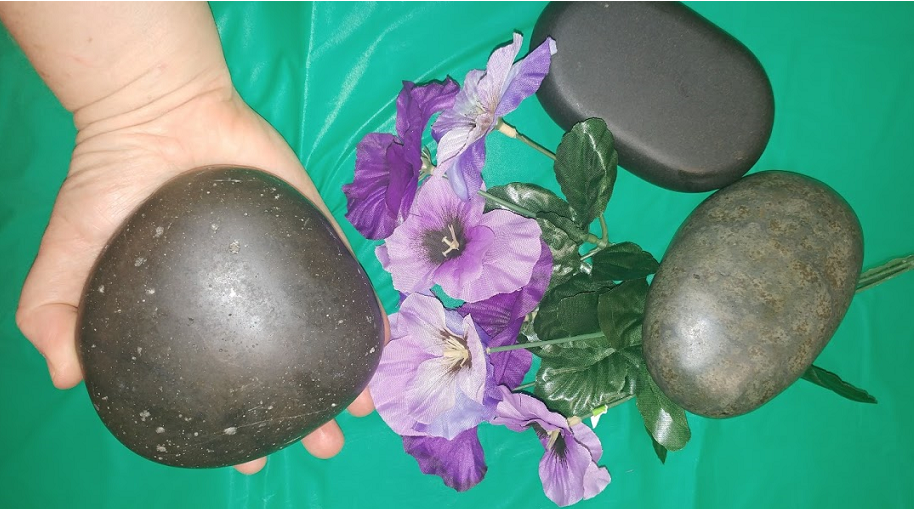
The stone used for sacral placement should be the largest of your set. The sacral stone is usually left on the body for the longest period of time. As such, the largest stone will usually retain the heat the longest and allow for long standing thermal therapy enjoyment.
As with any placement stone, a massage therapist should visually check the skin repeatedly after placement to ensure the stone is not too hot for the client, in addition to verbally asking the client if the temperature is comfortable for them. The number one injury in bodywork practice today is from hot stone massage practice, and those injuries are usually a result from client burns.
Here is an instructor explanation and demonstration of sacral stone placement in hot stone massage:
By Selena Belisle, Founder/Instructor, CE Institute LLC
Hot Stone Massage Operating Temperature & Placement Stone Practice Massage stones must remain fully immersed in water to maintain consistent temperature throughout for safe and best practices. At an operating temperature of 135-degrees, stones must be placed through two physical barriers on a client, or kept in motion while using them for massage.
Of course, anyone wishing to practice hot stone massage should seek professional training to do so.
Why Working Stones are Also Called Palm Stones Also, the 135-degree stones used for massage are frequently called "palm stones" because they are kept in the practitioner's palms during massage, which is some of the thickest skin of the body. A practitioner can usually handle a 135-degree hot stone because it is continually rotated in their palm, and the palms have less sensory neurons than our fingers too.
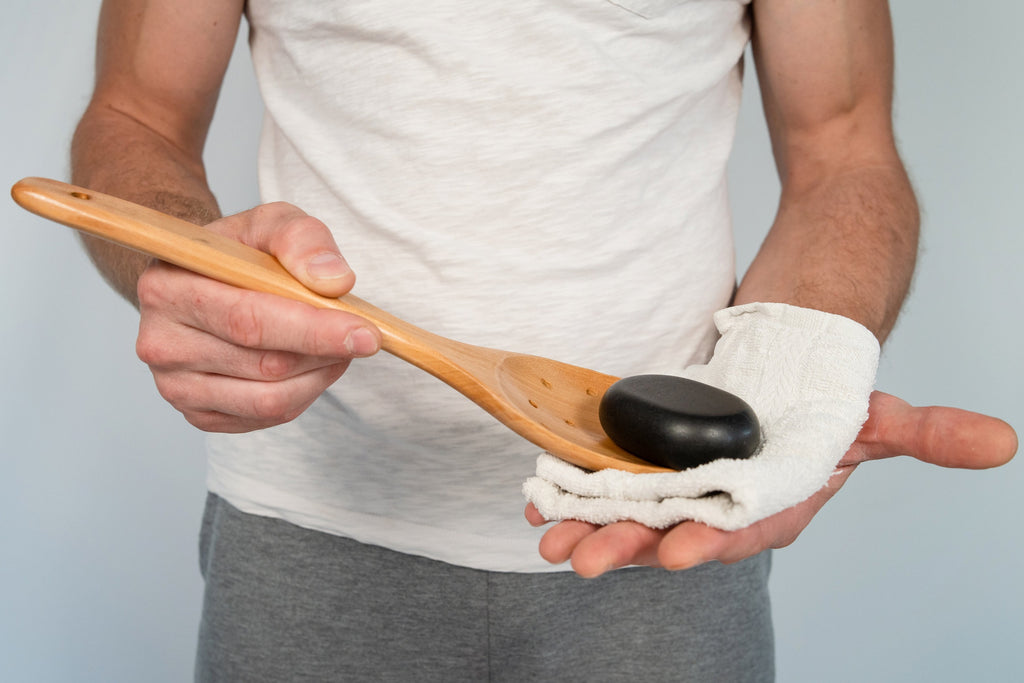
Proper Stone Bath Retrieval with Hot Stones We teach that practitioners should use a red or lighter colored slotted spoon because the water is too hot to stick fingers into a stone bath for stone retrieval.
Potential Hot Stone Massage Injury When Utensils Are Not Used Sticking finger tips which are loaded with sensory neurons and about 1/3 of the thickness of palm skin into a scalding 135-degree bath could desensitize a practitioner's digits to the heat, if they could tolerate it. Inserting fingers into the hot water bath also risks burn injuries to the practitioner. This is why we use tools to retrieve fully immersed stones in a hot stone bath.
Using Slotted Spoons and Tong Tools to Retrieve Hot Stones Using tools to retrieve stones have their own issues, but for now this is the best and most commonly practiced method for these reasons and more. We prefer the use of slotted spoons instead of tongs for hot stone retrieval, because tongs tend to drop more stones with 130+degree hot water splashing which can also be dangerous. While it's easy to drop stones in the bath with a slotted spoon, we feel this happens more frequently with tongs.
Knowing where skin is thinner or thicker in the body may help you determine a better service for your client. For example, a hot stone during hot stone massage will be more tolerable over the thicker skin areas of the body which would be more tolerable to heat. And services such as hot stone massage will require more attention in the thinner skin areas of the body, because the skin is thin and could easily be sensitive or burn to excessive heat.
Thin Skin: Above is a diagram of thin skin in the axilla/underarm region. Here, you can see that the outer layer of the epidermis (the stratum corneum) is much thinner than in the previous picture of thicker skin.
You can also see there is no stratum lucidum, but there are apocrine glands (labeled #8 on the pictured diagram above) which can produce a scent or odor. Most apocrine glands are found in the armpits, groin, and breast area.
Thick Skin: Below is a diagram of the skin of the human palm. Skin is regularly thicker on the palms of the hands and soles of the feet. This thick skin on the soles of the feet are what can lead to excessive dead skin and calluses.
The thick skin of your palm is also an ideal place to hold a stone, hence the nickname of "palm stones", also known as "working" stones, which are used to perform the majority of the hot stone massage in motion.
In this image below, you can also see the stratum lucidum layer of the epidermis. This is an additional translucent layer of skin of the epidermis that is found in few select places such as the palms of hands and soles of the feet, which helps makes the skin thicker than other areas of the body.
As such, it's common to hold hot working stones in your palms during hot stone massage. The skin of your palm is usually thick enough to tolerate this heat. However, sticking the extremely think skin of one's finger tips into scalding water to collect stones out of a hot bath is an extremely bad idea, and could result in thermal injuries to the practitioner's fingers or any human soft tissue that is placed into close to scalding water of a hot stone bath.
_____________________
Author Selena Belisle is the Founder of CE Institute LLC in Miami FL. She is a retired professional athlete and has been practicing massage therapy for over 30 years. Selena is an approved CE Provider with NCBTMB & the Florida Board of Massage. She now teaches full time for the Complementary and Alternative Health Care Industries. You can learn more about Selena’s training and CE classes at www.CeInstitute.com
Massage therapy is a wonderful nonpharmacological modality to help manage pain. There is growing recognition of this fact, including at The U.S. Joint Commission which is responsible for certifying and accrediting over 22,000 healthcare ORGANIZATIONS and PROGRAMS.
In The Joint Commission report's report, they stated that both pharmacologic and nonpharmacologic strategies have a role in the management of pain. This was their list of examples of nonpharmacologic pain management strategies: "physical modalities (for example, acupuncture therapy, chiropractic therapy, osteopathic manipulative treatment, massage therapy,and physical therapy), relaxation therapy, and cognitive behavioral therapy; Pharmacologic strategies: nonopioid, opioid, and adjuvant analgesics.”
This is just another affirmation that massage therapy is a non pharmacological apporach for pain management.
To learn more about massage modalities, please visit and register for training with us at: https://ceinstitute.com/ Please keep in mind that our courses are primarily for licensed healthcare professionals, however lay people are also welcome to attend most courses in an observer capacity to learn more about massage therapy and the many modalities practied by massage therapists.
Cleaning and sanitizing equipment and stones for hot stone massage can be achieved in a few easy steps. Because it does take time to sanitize in-between clients, we recommend scheduling extra time in-between hot stone massage appointments for these sanitation processes.
The warm, moist, dark treatment room setting of a hot stone massage service creates a perfect breeding ground for germs — a category that viruses, along with fungi, protozoa and bacteria, belongs to — so the massage therapist who offers stone massage must know how to sanitize massage stones. As such, stone massage therapists should already be well-versed in sanitation measures.
Massage stones that are composed of black volcanic basalt lava are porous in nature. That makes thoroughly cleaning or disinfecting them quite difficult; in fact, it is impossible to eliminate all viruses and bacteria while cleaning and disinfecting a porous stone.
These basalt stones born out of volcanic eruption and then tumbled in oceans or riverbeds for thousands of years are believed by some to have energetic qualities. It is our job to find a way to safely use these natural marvels without decreasing their healing value.
This includes sanitizing in a manner that does not deplete the stone’s iron-rich metallic properties. The metallic agents within a massage stone are what allow the stones to retain their temperature for longer periods of time more so than the average rock.
Here are 6 steps that recognize the special needs required to clean, disinfect and provide overall care for massage stones:
1. Unplug the stone warmer and remove all contents, including stones, thermometer, slotted spoons and oil bottles from the hot stone bath, to be individually cleaned.
2. The entire stone bath liner should be removed from the stone warmer. Any towels inside the stone liner should be discarded for laundering. After emptying the liner, the liner should be cleaned with soap and water (grease-cutting dish detergent works best and antibacterial hand soap is also an option.)
3. Each stone and implement should be individually washed with soap and water until each item feels clean and is visibly clean. I like to use a scrub brush or toothbrush to ensure a deeper cleaning on my stone massage service items. Cleaning will physically remove debris from a surface and most germs.
4. Newly cleaned stone massage items can either be dried with a towel or allowed to air dry. To restore some of a stone’s energetic properties after sanitizing, you can always lay the stones outside during a full moon or on some green healthy grass during a light rain. This energetical restoration process is usually practiced about once a month, depending on how often you use the stones.
5. For better sanitation effort, add stones and equipment (except for the stone warmer itself) to a disinfectant soak, or spray the stones and equipment with a disinfectant after cleaning. A list of disinfectants and their instructions to combat bacteria/viruses is listed on the EPA’s website.
Disinfectant use will help eliminate a greater number of germs than cleaning alone. Because disinfectants are not designed to remove physical debris from a surface, cleaning must be provided first or else the entire disinfection effort will be less effective, if not useless. Be sure to allow the disinfectant to sit for its prescribed dwell time (also known as contact time) for proper disinfection.
6. When starting a new hot stone massage service, the hot bath liner should be reinserted into the hot stone warmer and a fresh, clean towel should be placed inside the liner before adding clean water. I recommend adding five or more drops of tea tree essential oil to each stone massage bath for its antimicrobial properties; however, there is little scientific research to support this sanitary use.
In this video below, we will these review steps, and some additional efforts you could make during a pandemic as well..
Hot stone massage has been normally contraindicated for past oncology clients; however, as oncology treatments have improved, our hot stone massage treatment options have as well.
According to the National Cancer Institute, it is estimated that there are more than 16.9 million cancer survivors alive in the U.S. today and that number will grow tomore than 22.1 millionby 2030. Additional statistics show that almost half of men and one-third of women in the US will receive a cancer diagnosis in their lifetime. Because our oncology population continues to grow, most massage therapists will find themselves working with both cancer patients and survivors at some point in their careers.
This increasing oncology populace is due, in part, to the advances in oncology treatments that are used to prolong life and fight cancer. And while cancer is not a general bodywork contraindication, some oncology treatments are, especially with the application of hot stone massage.
Luckily, today we have better academic recognition of how hot stone massage can and cannot be applied with several oncology treatments. After all, fighting cancer should not end all possibilities of enjoying a hot stone massage for those who love it or just want to try it. Instead, oncology practitioners should review how a hot stone massage service can be provided or modified with various oncology treatments for this vulnerable and rising population.
And with full disclaimer, this article specifically speaks to the application of hot stone massage with three popular forms of oncology treatments. This article does not speak to working with oncology or massage as a whole.
Primary Oncology Treatments
The three primary forms of oncology treatments used to fight cancer today are surgery, radiation, and chemotherapy. Most will receive at least one or a combination of the three to combat their cancer diagnosis. Let’s look at how these three oncology treatments affect hot stone massage practice.
Oncology Surgery
Surgery creates an acute medical situation. In simplified terms, tissues are cut, inflamed, and then heal, in most circumstances. After healing, the surgical site scar may be sensitive and is prone to further damage. Placement and working stones should never be applied directly over a dermal scar.
Nervous system innervation can be cut or pierced during oncology surgery. And in some surgeries, major nerves can be briefly retracted from a surgical site, which could cause a temporary, delayed or permanent dysfunction of sensory abilities.
Aside from the immediate surgical site, most cancer survivors should be able to receive hot stone massage after oncology surgery without adverse effect, minus a few exceptions, such as nervous system damage or additional oncology treatments.
Oncology Radiation
Healthy tissues, including nervous system innervation, are often destroyed alongside cancer cells in radiation treatments. Survivors who received external radiation decades ago have likely lost some or all sensation in the treated area. Areas that have had been treated with internal or external radiation can be severely damaged and are a permanent local contraindication for hot stone massage. Do not ever place or move hot stones over radiated tissues.
Modern day oncology radiation recipients may have less damage due to incredible technological advances; however, all radiated tissue is susceptible to a lifetime potential of greater injury, regardless of when the radiation was administered.
Some radiation clients will have tiny dot tattoos that show where their external radiation was focused. Practitioners can work around a radiated tissue if they are 100% certain they are able to avoid all of it. Consider using a cooler stone bath for these clients.
Oncology Chemotherapy
An oncology client who has received a recent dose of chemotherapy is not a good candidate for hot stone massage. Practitioners should not promote thermal therapy manual circulation during the tissue metabolism of chemotherapy without specific approval from the prescribing oncologist.
An active chemotherapy cancer patient may also have a port or another external device affixed to their body. All externally affixed body devices are a local contraindication for both placement and working stones.
A cancer survivor who has completed their chemotherapy treatments may be a great fit for hot stone massage. However, there are a few caveats. For example, those who have lost nervous sensation. Chemotherapy can damage nerve cells throughout the body, which can result in neuropathies and more.
Hot Stone Massage and the Nervous System
All hot stone massage recipients must be able to feel the heat of a stone to help avoid the potential of being burned by it. Hence, their nervous system’s sensory capabilities must be intact and fully functioning. Practitioners should avoid areas that have lost sensation as a local contraindication and not administer any hot stone massage at all if the entire body’s nervous sensation is impaired.
Chilling with Oncology Treatments
Many oncology treatments can leave a client feeling cold. The thermal therapy effects of hot stone massage can be remedial for a chilled client, once all other bodywork considerations have been addressed.
Other hot stone massage considerations for oncology surgery, radiation and chemotherapy treatments include:
•Lymph Nodes and Swelling
Oncology treatments often focus on lymph nodes because they are a common area for metastatic cancer. Lymph node cancer treatments can create swelling in the localized treatment area. Do not apply hot stones or massage therapy to any areas of swelling.
•Fatigue and Frailty
Oncology treatments can cause extreme fatigue. These treatments can also cause a deterioration of skin, muscle, bone or any combination of the three.
If an oncology client seems excessively frail or in need of a colossal doze, consider switching the hot stone service to a bodywork that does not require frequent verbal communication and solely uses the hands instead of the harder surface of a stone. Frail and fatigued oncology clients will normally benefit from some adequate rest and doubly so with the correct massage.
• Additional Side Effects
Almost all cancer survivors will have a lifelong impact from their oncology treatment(s). However, survivors are usually better candidates for hot stone massage than those who are actively fighting cancer.
Active oncology treatment recipients have an extensive list of possible side effects, such as mouth sores, lowered immunity or hand-foot syndrome, which all create additional oncology bodywork considerations. Sometimes, these side effects can last longer than the oncology treatment that caused them, but the severity does lessen for most survivors over time.
Modifying Hot Stone Massage for Oncology Treatments
In review, we have shown that these three primary oncology treatments chiefly create local contraindication sites more than full-body or total service contraindications for hot stone massage. As such, think about how hot stone massage can be adapted for local contraindications. For example, the arms and legs make up over half of the human body’s surface area.
Applying hot stone massage to an oncology client’s extremities is a great modification to work the majority of the body when the head, chest or organ areas have local contraindication(s). Even with a modified application, the thermal therapy effects of hot stone massage may be a wonderful relief for oncology clients who have pain, feel cold, or just want a special volcanic retreat from their everyday life.
Still, because there are so many medical considerations with oncology treatments, partial or full body hot stone massage should only be provided on a case-by-case basis for multiple reasons beyond any single list that can be conceived here or anywhere. Keep in mind that all general hot stone and oncology bodywork contraindications, such as fever, active vomiting, infection and more, are still applicable.
Consultation and Training in Oncology and Hot Stone Massage
Unfortunately, like many bodywork subspecialties, we have very little research with oncology hot stone massage. Until we do, it is safest and best practice to consult with the client’s oncologist prior to administering hot stone massage for individual concerns and needs.
While we have addressed hot stone application with three different oncology treatments here, general oncology bodywork and hot stone massage education is another matter. Specific oncology and hot stone massage CE classes should be sought prior to practicing either. Training in both should help provide knowledge of the adaptations, precautions and contraindications necessary to practice hot stone massage with cancer patients and survivors.
CE Institute LLC Oncology & Hot Stone Massage Instructor Selena Belisle will share some ideas of how hot stone massage could be applied for cancer patients and survivors in this brief 18-minute video.
Hot stone massage has become a favored choice by clients, especially during vacations or in colder climates, but not practicing hot stone safety could leave a practitioner in hot water. An internet search shows that some clients were injured once the massage industry started rocking these popular appointments.
130-degree Fahrenheit water can burn human tissue within one minute, according to the American Burn Association, yet the average operating temperature of a hot stone bath is approximately 130 degrees. Additionally, a practitioner’s hands can become increasingly desensitized with repeated hot stone treatments.
As such, a practitioner could unintentionally yet easily burn a client with their mineral marvels. This has created some significant safety protocol updates for the practice of hot stone massage.
The Massage Stone Heater (aka Stone Bath Unit) Practitioners are using turkey roasters, crock pots, kitchen griddles, hot towel cabins, kettles, heating pads and other types of heating devices, in addition to professional stone massage bath units, to heat their stones. For best practices, all stones must be fully immersed in water within a heating unit. This is known as the bath. Stone bath units that have a built-in temperature gauge within a hot stone bath operating range are preferred.
Alternative heating sources that do not include a total water immersion can create uneven stone surface temperatures. Unevenly heated stones are not reliable or safe to use, especially when working near maximum operating temperatures.
Stone bath units must also have an adjustable temperature control. Practitioners must continually adjust the bath temperature as needed, especially if cooler stones are returned to the bath, to maintain a proper operating temperature.
Temperature Measuring Devices Because of various logistics, including unreliable gauges, temperature accuracy comparisons, and temporarily lost thermometers in the stone bath, it is now advisable to use two temperature measuring devices during hot stone massage. A meat thermometer and stone bath unit with a built-in temperature gauge are the most popular choices. Measuring devices should be easy to view in a dark treatment room setting and have available readings within a proper hot stone massage temperature operating range.
Temperature Operating Range At CE Institute LLC, we teach our students to operate their hot stone baths between 120 to 135 degrees Fahrenheit. A hot stone bath should be operated between 120 to 135 degrees Fahrenheit.
There are some schools, instructors and practitioners who work at slightly higher and lower operating temperatures, which is an individual choice. Best practices should instill a conservative approach to balance safety and comfort with thermal therapy enjoyment.
Temperature Management Check the stone bath temperature every time the stones are removed from the bath and at least once every five minutes during any hot stone service. That means the operating temperature should be visually inspected a minimum of 12 times during a one-hour hot stone massage appointment.
It is critical to frequently monitor the stone bath operating temperature and adjust it accordingly when the calefaction is headed in the wrong direction. Regular checks will allow for manual temperature adjustments as needed, to maintain a proper temperature operating range.
Heating (and Overheating) Stones Provide ample time to heat your stones prior to an appointment. Cranking the stone bath unit to preheat mode or absurd temperatures to quickly heat the stones will usually result in the outside surface of the stone becoming hot but leave a colder core inside the stone. That is an unsatisfactory effect when the stones quickly cool during hot stone massage application.
Conversely, in an attempt to quickly heat stones, the bath and stones can overheat. Never cool the bath with cold water or ice. Cold water or ice can cool the outside surface of the stone while the inside core temperature could still be burning hot. Eventually, that core temperature inside an overheated stone will make its way to the stone’s outer surface. A roguishly cooled 200-plus-degree inner core stone can burn the client once that inner temperature reaches the stone’s outer surface.
It is recommended to turn off the stone bath unit and continue with regular massage when a bath has overheated. Do not use overheated stones under any circumstance.
Placement Stone Use Placement stones are arranged on the body without movement. They are also called static stones. A minimum of two barriers are required between the client’s skin and a placement stone. The two barriers can be a sheet plus a blanket, or a sheet plus a towel or any two barriers that seem appropriate.
Common areas for placement stones include laying stones over the sternum, sacrum, back, palms of hands or soles of feet. (You might need to explain the need for the two barriers to the client, because more than half of stone massage stock photos that depict a client receiving a stone massage show a placement stone sitting on a client’s bare skin. Hot stone massage advertisements should depict updated applications that demonstrate either working stones in motion or placement stones applied over a minimum of two barriers—or both.)
A practitioner should inspect the client’s skin periodically after a placement stone is applied over two barriers. That means removing the barriers (without overly exposing the client) and looking at the client’s skin to ensure it is not welting, blistering, unnaturally discolored or showing any other sign(s) of distress. The practitioner should also touch the skin to ensure it is not excessively hot. The goal is to safeguard the client from being burned.
Retired Placement Stones The following placement stone applications have been discontinued in most work settings:
Facial stones and cozy stones between the toes, because two barriers are difficult to achieve with either. Abdominal stones, because it is awkward and difficult to make visual safety observations on the sensitive skin of a client’s tummy. Back stones while a client is in supine position, because a client should never lay their full body weight on top of a heated modality that has the potential to burn or harm them.
Any stones that cannot be placed with a minimum of two barriers between the stone and client.
For modified practice, room temperature placement stones can be used when hot stones cannot be safely applied with two barriers. Most hot stone massage appointments continue to include both placement stones and working stones in motion.
Hot Stone Safety and Gloves Never wear gloves for hot stone massage. That is because any stone that is too hot for a practitioner’s hands is likely too hot for a client as well, regardless of what the thermometer says.
Never trust a temperature measurement if the stones feel too hot. If the temperature feels wrong, simply stop using the stones until the temperature devices can be verified for accuracy prior to reuse.
Practitioner Skin and Heat Sensitivities Practitioners should reconsider the provision of hot stone service if they are uncomfortable with a 120- to 130-degree Fahrenheit hot stone operating range. It is critical to be able to handle a hot stone comfortably so that it is not improperly applied due to practitioner discomfort.
Hot Stone Safety and Bone In addition to a potential burn, an injury can happen when the hard surface of a stone inappropriately contacts human bone. Avoid applying pressure with stones into superficial or protruding bone.
Hot Stone Safety Client Communication Practitioners should frequently check in with a client about stone temperature, especially with each new work area, such as when the bodywork moves from the arms to the legs. Immediately remove all stones if a client says it is too hot or painful and do not continue unless it can be assured that the:
Bath temperature is within operating range.
Client is comfortable and wants to continue with hot stones.
Client has not been injured or burned.
Do not rely on client communication for a proper hot stone operating temperature. A client could fall too far into their mental vacation to provide critical feedback during a hot stone massage.
Practitioners must engage in active strategies to ensure practical safety beyond verbal communication. This includes frequently checking the bath temperature plus visually inspecting and touching the skin among other available remedies, to prevent injury.
Infection Prevention Anything that comes in direct or indirect contact with a client must be sanitized between every consumer – period.
Hot Stone Safety Training The thermal ritual of hot stone massage can offer an incredible vacation on a table experience but this service does require special training. While this article focuses on hot stone massage safety, a quality CE class can provide a more complete education of stone massage safety advisories, practices, applications, precautions, protocols, and contraindications.
In this 25-minute video below, we'll review these up-to-date practices of hot stone massage in better detail, as well as those older hot stone massage practices that have been "retired" (or discontinued).
We have a new free 30-minute training video that teaches massage therapists and other practitioners about several various heated thermotherapies that are easily available for business practice today. Adding heated thermotherapy applications to your practice is easy and affordable, but should only be practiced with adequate training to ensure efficacy and do no harm.
For comprehensive training in soft tissues treatments, please visit and register at: https://ceinstitute.com/